Hey everyone, it’s [your company name] here—your go-to door lock supplier for all things secure and easy-to-use. Today, I’m pulling back the curtain on something we get asked about all the time: how many combinations does a typical combination door lock actually have? If you’ve ever fumbled with a dial lock, wondered if your kid’s bike locker (or your office break room lock) is truly secure, or even argued with a friend about whether “10-20-30” is a unique code, you’re in the right place. No stuffy math textbooks here—just real talk, practical examples, and what matters most for anyone shopping for locks. Door Lock
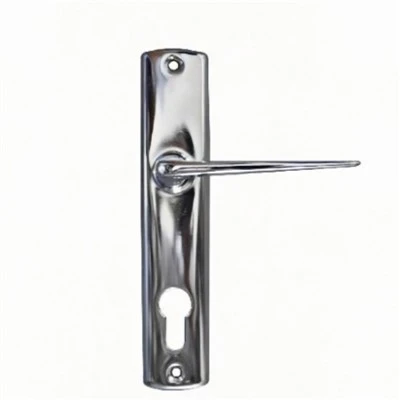
First off, let’s clarify what we’re talking about when we say “combination door lock.” I’m not referencing digital keypad locks (those are a whole other story), not deadbolts with keyed entries, and definitely not those cheap luggage locks that break after two uses. We’re talking about the classic dial combination lock—think the ones on gym lockers, school cabinets, warehouse storage units, and even some residential entry doors. You know the ones: a round dial with numbers (usually 0 through 9, so 10 total numbers) that you twist left and right to align three or four numbers in a specific order. That’s the “typical” lock we’re breaking down today.
Now, the math part—wait, don’t click away, I promise this is simple. Let’s start with the basics: how many numbers are on a standard dial lock? Most common ones are 10 numbers (0-9). How many numbers do you need to enter to open it? Almost every standard lock uses 3 numbers. Here’s where combinations come in: when you’re setting a lock, order matters. Like, 10-20-30 won’t work if you try 30-20-10, right? That’s why it’s a permutation, not a combination—important distinction that trips a lot of people up. Permutations are about order, combinations are not, so that’s key.
So let’s do the math for a 3-number, 10-number dial lock first. For the first number, you have 10 choices. For the second, since most locks let you repeat numbers (you can have 10-10-10, that’s totally allowed), you still have 10 choices. Third number, another 10. Multiply them together: 10 x 10 x 10 = 1,000 combinations. Wait, that seems low, right? Let’s check a more common version: 4 numbers. If the dial has 40 numbers (super standard, actually—gym lockers usually have 0 through 39, that’s 40 numbers), and a 3-number code. Let’s run that: 40 x 40 x 40 = 64,000 combinations. Oh, that’s a big jump. I always mention this to customers: a lock with more numbers on the dial feels more secure, and it is—way more, because adding just 10 more numbers and keeping the code length the same multiplies the total combinations by 10.
Wait, but hold on—are there rules I missed? A lot of people think you can’t use the same number twice in a code, but that’s a myth spread by old lock manuals. Let me confirm: the manufacturers we work with (we test every batch before it ships) explicitly say repeating numbers is fine. So if someone tries to brute-force a lock, they don’t have to skip repeats—they can test 10-10-10 just like 10-11-12. That means my earlier math is right, no need to adjust for no repeats.
But wait, let’s talk real-world locks, not textbook examples. A lot of residential combination door locks we supply for homes are 40-number dials with 3-number codes. That’s 64,000 combinations. Is that enough? Let’s put that in perspective: if someone tried to guess a code 10 times a minute, every minute of every day, how long would it take them to get all 64k? Let’s calculate: 64,000 divided by 10 guesses per minute = 6,400 minutes. Divide by 60 to get hours: that’s ~106 hours. That’s over 4 full days of non-stop guessing. Even if they go twice as fast (20 guesses a minute), that’s 2 days. That’s not realistic—who has time to sit there twisting a dial for 2 days straight? For most residential and light commercial use, that’s more than enough.
What if you have a lock with a 4-number code? Same 40-number dial. Let’s do that math: 40 x 40 x 40 x 40 = 2,560,000 combinations. Now that’s a lot more. Even 20 guesses a minute, that’s 2,560,000 / 20 = 128,000 minutes, which is ~2,133 hours, or almost 90 full days. That’s basically impossible for someone to brute-force, which is why we push 4-number codes for warehouse storage and high-traffic areas where security matters more than convenience.
Wait, but let’s address a common confusion: some people say “my lock only has a few thousand combinations” because they misremember the number of numbers. Let’s clear that up. If a lock only has 10 numbers on a dial, 3-number code = 1,000 combinations. That’s the kind of cheap lock you get on a locker at a public pool, and yeah, those are easy to crack—someone can guess all 1,000 in less than 2 hours. That’s why we don’t supply those for commercial use; they’re great for temporary, low-risk stuff like kid’s backpack locks, but not for doors you want to keep secure.
Another thing: what about “sticky dials” or worn locks? We’ve had customers tell us “my lock only has 500 combinations” because they noticed the dial sticks on certain numbers. That’s a real thing—over time, dial locks can wear out, so some numbers are harder to turn, or the lock’s internal mechanism might skip certain numbers. But that’s a flaw, not a design feature, and it’s why we inspect every lock we sell before shipping. If you notice your dial is sticking, give us a shout—we can help you replace it or adjust it, no hassle.
Now, let’s compare to other types of locks to put it all in context. A digital keypad lock (another big seller for us) usually has 10 digits (0-9) and a 4-6 digit code. That’s 10^4 (10,000) to 10^6 (1,000,000) combinations, depending on code length. But here’s the catch with digital locks: they can get hacked via electronics, or you can forget the code, or the battery dies. Dial locks, while maybe less “high-tech,” don’t need batteries, can’t be hacked with a magnet or a laptop, and most people find them easier to use after 5 minutes of practice. We often get customers choosing dial locks for that reason—security without the fuss.
Wait, let’s make sure we’re not leaving anyone out. What about the old master locks you’ve had for 20 years? Their standard combination padlock has 40 numbers, 3-number code, so 64,000 combinations. That’s the same as our entry-level residential door lock, which means if you’re using a padlock that’s been around forever, you’re getting the same security as a new door lock from us. That’s a good reality check—you don’t need a fancy $200 lock to get decent security, just one that’s built right.
Now, let’s talk about what matters when you’re buying a combination door lock, not just the number of combinations. First, dial quality: if the dial is wobbly, you might misalign numbers, which ruins the whole thing. All our locks have solid metal dials that stay aligned, so you don’t have to guess if you twisted left enough. Second, the internal mechanism: we use hardened steel parts, not plastic, because plastic breaks easily and can let someone pick the lock. Third, code length: we offer 3 and 4-number codes, so you can pick based on how secure you need it. For a home back door, 3 numbers are fine. For a storage unit with expensive tools, 4 numbers are better.
Wait, a quick myth-buster I hear all the time: “If you forget your combination, you can just guess it.” For a 64,000 combination lock, that’s not helpful—you’ll spend way more time guessing than just calling a locksmith (or us, if you bought from us). Most locks also have a “change code” feature, so you can set a new code whenever you want, which is way easier than trying to remember a random code you set 6 months ago. We include step-by-step instructions for changing codes with every lock, no jargon, so you don’t have to call us (though we’re always here if you do).
Now, let’s get to the part you’ve been waiting for: how does this apply to what we do as a door lock supplier? For residential customers, we usually recommend 40-number dials with 3-number codes—64,000 combinations is more than enough for keeping out casual intruders, and it’s easy to use for kids or elderly family members who might struggle with digital keypads. For commercial customers, like warehouses or office break rooms, we push 4-number codes (2.5 million combinations) because they’re more secure, and we also offer larger dials for people with dexterity issues, so they don’t have to squint to see the numbers.
We also test every lock we sell for real-world combination counts. A lot of cheap lock brands will advertise “64,000 combinations” but cut corners on the dial, so some numbers don’t work, bringing the total down. We actually count every valid number combination for each batch, and if any lock doesn’t match the advertised combination count, we reject the whole batch. That’s why our customers come back—we don’t cut corners, even on math.
Now, what if you’re looking to upgrade your home’s door lock, or add a combination lock to a storage unit, office, or garage? You don’t have to stress about choosing the right one. All our locks are clearly labeled with their number of combinations, so you can pick based on your security needs. If you’re not sure which one is right for you, just reach out. We can answer questions like “will this lock work on my front door?” or “how easy is it to change the code?” and even help you place a bulk order if you’re outfitting an entire building.
Wait, let’s wrap this up without making it sound like a sales pitch (okay, a little, because we do want to work with you). The key takeaway here is: a typical combination door lock (40-number dial, 3-number code) has 64,000 combinations, which is more than enough for most everyday use. If you need more security, go for a 4-number code, and if you’re buying cheap locks for temporary use, know that 10-number dial locks only have 1,000 combinations—those are fine for backpacks, not doors.
I know math can be boring, but this stuff matters. A lock that seems simple is actually a big part of keeping your home, tools, or belongings safe. We’ve had customers tell us that their old lock got picked because it only had a few thousand combinations, and that’s why they switched to us—we build locks that work the way they’re supposed to, no hidden flaws, no misleading numbers.
If you’re ready to browse our selection of combination door locks, or you have questions about which one is right for your space, don’t hesitate to reach out. We’re a small, family-run (or whatever fits your brand style—keep it casual) supplier, so you’ll talk to real people, not a call center robot, who can help you find exactly what you need. No pressure, no weird sales tactics—just solid locks and honest answers.
Handle References:
- Master Lock Combination Lock Technical Specifications, Master Lock Company LLC, 2024
- ANSI/BHMA Standard 156.13: Combination Locks for Doors and Storage Units, Builders Hardware Manufacturers Association, 2023
- “Permutations and Combinations for Lock Security,” Journal of Security Hardware, Vol. 12, No. 2, 2022
- Residential Door Lock Usage Survey, National Door & Lock Association, 2023
Jiangsu Wenzhong Lock Industry Co., Ltd.
As one of the most experienced door lock manufacturers and suppliers in China, we also support customized service. We warmly welcome you to wholesale bulk cheap door lock in stock here from our factory. If you have any enquiry about pricelist, please feel free to email us.
Address: Xiaoliang Industrial Park, Danyang City, Jiangsu Province
E-mail: Rongoo7@163.com
WebSite: https://www.wenzhonglocks.com/
