Hey there, if you’re here because you’re deep in the weeds of setting up a new aerosol filling line or tweaking one that’s been lagging, you’ve probably stared at a container of hairspray, oven cleaner, or air freshener and thought – wait, how much of that stuff do you actually put in there? Spoiler: it’s not a random number, and the filling volume range for an aerosol line is way more flexible than most folks think, as an aerosol filling line supplier that’s worked with brands small (think indie candle wax spray makers) and huge (global cleaning product giants) for over a decade, I’ve seen everything from 5ml test sprays to 1000ml industrial aerosol cans roll through our lines. Aerosol Filling Line
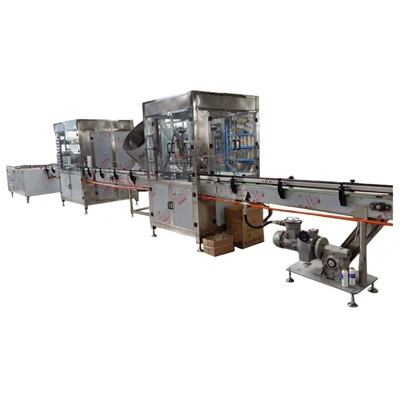
First, let’s cut through the confusion – a lot of people mix up net product volume (what the consumer actually uses) and total can volume, which is the metal or plastic can’s full size, plus the propellant, headspace for pressure, and that tiny bit of extra product to account for temperature changes. But when we talk about filling volume ranges for an entire line, we’re covering the full spectrum of what that line is built to handle, not just one specific can. Let’s break down the actual ranges, because that’s the good stuff no basic spec sheet will spell out for you.
The tiny end of the spectrum – that’s the micro-aerosol stuff. Think the travel-sized hand sanitizer sprays, the mini touch-up paint pens, or even the little medical sprays for throat care. Most standard aerosol lines can handle these down to 5ml net product volume, but if you get a super-specialized line for lab or medical use, we’ve done 2ml too. Wait, hold on – you can’t just cram 2ml into a regular 10ml can, right? Nope, that’s where line flexibility comes in. These micro-setups have super precise filling nozzles (like, millionths of a liter precise) so you don’t get half-filled pens or overflow that gunked up the line. A lot of small brands starting out don’t realize they don’t need a whole custom line for these – we can tweak our standard lines to do micro-fills without breaking the bank, which is why we’ve had so many startup brands come to us for that.
Then the mid-range, which is where most consumer aerosol brands live. That’s the everyday stuff: hairspray, deodorant, oven cleaner, air freshener, spray paint. The net product volume here usually runs from 100ml up to 500ml, with total can volumes (which is what the line is sized for) from 120ml to 550ml. Wait, why the discrepancy? Propellant. You need about 15-25% headspace for propellant and pressure, so a 400ml net hairspray goes into a 500ml can – 400ml product, 100ml propellant. Our standard off-the-shelf lines are built to handle this mid-range like a dream, because that’s 90% of the demand from brands. We once had a big deodorant brand come in with a weird request: they wanted a 75ml net product in a 100ml can, which is a little below our usual mid-range, but we just swapped out the filling pumps and nozzles to adjust, no big drama. The key here is that a good line’s range isn’t fixed – it’s adjustable within a sweet spot.
Now the big end, the industrial aerosol side. That’s the stuff no one keeps in their bathroom or under the sink: industrial lubricants, agricultural sprays, fire suppression aerosols, marine-grade maintenance sprays, even some construction adhesives. These run from 500ml all the way up to 1000ml net product, with total can sizes up to 1200ml. A lot of people think aerosol lines are only for small consumer cans, but no – industrial lines have way sturdier frames, bigger conveyors, and stronger filling nozzles because those cans are thicker, heavier, and might have harsher products (like solvents that can eat through cheap parts). We’ve worked with a farming company that needed 800ml agricultural insecticide aerosols, and we upgraded their line’s seals to handle the corrosive formula, and it still fits into the 500ml to 1000ml net range we build for industrial use. Some custom lines we’ve done for mining operations even go up to 1500ml, but that’s super specialized – not the standard stuff.
Wait, but hold on – what are the limits here? You can’t just throw any size at a line, right? Let’s talk about the constraints, because that’s where a lot of brands mess up. First, the line’s conveyor frame: if you’re trying to put a 1500ml can on a line built for 500ml cans, the conveyor will either bend or the can will fall off. Then there’s the filling pump: small micro lines have tiny pumps that can’t move enough product for a 1000ml can, and big industrial pumps can’t accurately fill 5ml without wasting a ton of product (like, you’d end up with 4ml or 6ml every time, which is bad for both brand and consumer). Then there’s the pressure and sealing part – aerosol cans need a specific amount of headspace, so if you try to fill a 1000ml net product into a tiny can, you won’t have room for propellant, and that can will explode. No joke, we’ve had a brand try to do that on a old line and ended up with three exploded cans in the test run – that’s why we test every range adjustment with a small trial batch before a brand goes all in.
Also, don’t forget about regulatory stuff, because that ties right into volume ranges. In most countries, the FDA (in the US), EFSA (EU), and other regulators have strict rules about net content labeling. So if you set your line to fill 100ml, you can’t have a single can that’s 98ml – it has to be within a tiny tolerance, like ±2ml for most mid-range cans. That’s why our lines have built-in checkweighers that scan every can to make sure the volume is on point. A lot of small brands come to us worrying about that, because they don’t want to get fined for under-filling, so we make sure every line we sell has that adjustment built in, so you can tweak the volume within the range without messing up compliance.
Wait, another thing I’ve noticed over the years: a lot of people think “aerosol filling line” is one size fits all, but the best lines are modular. Like, our lines have change parts that let you swap between a 50ml travel spray and a 500ml oven cleaner can in under 2 hours, no tools needed. That’s a game-changer for brands that make multiple products, not just one. I had a client a couple years back who made both mini window cleaning sprays and big bath tub spray, so they switched between them every week without having to call us to re-calibrate anything. That’s way better than buying two separate lines, obviously – saves them money and space.
Let’s talk about common mistakes brands make when picking a line, because that’s half the battle. First, only looking at the “max” volume a line can do, not the full range. I’ve had a startup come in and say “we need a line that does up to 500ml” but their actual product is 150ml – so they end up with a line that’s overkill, more expensive, and less accurate for their actual volume. Second, ignoring headspace when setting volume. Some brands try to fill 90% of the can with product, leaving only 5% for propellant, and then when the can warms up on the shelf in a warehouse, the pressure builds so much it can leak. Third, not accounting for future growth. If you’re launching a 200ml product now, chances are you might want to do a 400ml version in a couple years – so buying a line with a flexible range that can grow with you is way better than having to replace it in 2 years.
Oh, and let’s not forget plastic aerosols! A lot of people think aerosols are just metal, but plastic (usually PET) aerosols are super popular now for things like body mist, travel sprays, and even some cleaning products. The filling volume range for plastic lines is almost the same as metal, but they need different handling because plastic is lighter and can be deformed if filled too fast. Our lines have separate settings for plastic vs metal cans, so you get the same accurate fill whether you’re using a 50ml plastic travel mist or a 400ml metal hairspray can.
I should also mention that these ranges I’m talking about are for standard, single-use aerosols. If you’re doing refillable aerosols (which are big for sustainability now), the ranges are a little different – usually between 100ml and 750ml net, because refillable cans need to be strong enough to be filled multiple times, so they’re a bit bigger than single-use. We’ve built a bunch of refillable lines lately, and that range is perfect for brands trying to cut down on plastic waste.
Wait, let’s circle back to the original question: what are the filling volume ranges? To make it super clear, here’s the breakdown we use with every client, no jargon:
- Micro-aerosols: 2ml – 10ml net product (for medical test sprays, mini pens, travel mists)
- Consumer mid-range: 50ml – 500ml net product (deodorant, hairspray, cleaning sprays, spray paint)
- Industrial & refillable: 500ml – 1000ml net product (lubricants, agricultural sprays, refillable home products)
- Specialized custom lines: up to 1500ml net product (for industrial mining, large-scale fire suppression)
And like I said before, that’s not a hard line – a good line will let you adjust within that range, and even cross between micro and mid if you need, as long as you swap the right parts. The key is working with a supplier that doesn’t just sell you a line, but walks you through what you actually need, not what they have sitting in a warehouse.
I’ve been doing this for 12 years, and the number one question I get from new clients is “how do I know what volume range I need?” The answer is: look at your current product, or what you plan to launch, then leave a little room for growth. If you’re a startup with a 150ml air freshener, go for a line that does 50ml – 500ml, not a line maxing at 150ml, because you’ll want to expand. If you’re a big brand launching a new industrial lubricant, go for a line that does 500ml – 1000ml, so you can test smaller sizes later if you want.

If you’re in the market for an aerosol filling line, or you’re stuck with a line that’s giving you off volume fills, hit us up. We’ll walk you through exactly what range fits your products, no sales pitch nonsense, just real talk based on what hundreds of brands have gone through before you. We’ll even do a free test run with your product to make sure the line hits the volume targets you need, stays compliant, and doesn’t waste product. Don’t guess – work with a supplier that knows the range game inside and out.
Aerosol Filling Line References
- Aerosol Packaging Association. (2022). "Global Aerosol Filling Line Specifications & Volume Standards." Industry Technical Report.
- European Federation of Aerosol Producers. (2023). "Regulatory Guidelines for Net Content and Pressure in Aerosol Filling." Compliance Handbook.
- United States Food and Drug Administration. (2021). "Guidance for Industry: Aerosol Drug Products – Filling and Labeling Requirements." Regulatory Document.
- International Society of Beverage and Food Aerosol Technology. (2022). "Flexible Filling Ranges for Modular Aerosol Lines." Technical Paper.
Yangzhou Meida Filling Machinery Co., Ltd.
Yangzhou Meida Filling Machinery Co., Ltd. is well-known as one of the leading aerosol filling line manufacturers and suppliers in China. If you’re going to buy high quality aerosol filling line, welcome to get more information from our factory. For price consultation, contact us.
Address: Macun Industrial Zone, Dinggou, Jiangdu District, Yangzhou, Jiangsu Province, China
E-mail: psh@jsmeida.com
WebSite: https://www.meitarmachine.com/
