Hey folks, if you’re an industrial facility manager, plant owner, or someone who’s ever dealt with the nightmare of old lighting in a warehouse, factory floor, or storage yard—you know the drill. Flickering fluorescent tubes, high energy bills that make you wince, lights that die out right when you need them most… it’s enough to throw off production, mess with worker safety, and eat into your profit margins. That’s where LED Par lights come in, and as a LED Par Light supplier, I see this every single day: so many industrial teams still clinging to outdated tech when they could be switching to something way smarter. Let me break this down straight, no corporate jargon, just what actually works when using LED Par lights for industrial spaces. LED Par Light

First off, let’s cut to what makes LED Par lights different from your old industrial lights. Par lights—originally made for stage lighting, right? The “Par” stands for Parabolic Aluminized Reflector, which just means they’re built to throw light in a tight, even beam, no weird hot spots or wasted light. For industrial use, that’s a game-changer. Old metal halide or HID lights spread light all over the place, including up at the ceiling or out the windows, which is just energy going to waste. LED Par lights are directional, so you can aim exactly where you need it—on the assembly line, the loading dock, the storage racks—nothing extra. Plus, they use like 75% less energy than HID lights, last 25 times longer, and don’t heat up like a space heater (huge for factories where heat adds to AC costs).
Wait, but let’s get real—industrial spaces aren’t all the same. A 10,000 sq ft warehouse storing pallets is way different from a small metal shop with welding stations. So using LED Par lights right means matching the type to your space, not just grabbing the cheapest one on Amazon. Let’s walk through the most common industrial use cases I see with clients, and what works for each.
First up: warehouse and storage facilities. These are usually big, open spaces with tall ceilings (15-30 feet is standard). Old lights here often leave dark spots between storage racks, or glare that makes workers squint when they’re picking orders. For this, you want LED Par lights with a wide beam angle—like 60 to 90 degrees. Wait, why not a narrow angle? A narrow angle (15-30 degrees) is great for spotlights, but for covering a big, open floor, you need that wider spread to light up multiple racks at once. Also, make sure to pick ones with a high lumens output—minimum 100 lumens per watt, ideally 120+—so you don’t have to double up lights just to get visibility. Pro tip I tell all warehouse clients: don’t mount them too high without checking their height rating. Some entry-level LED Par lights are made for stage, not for outdoor or high-ceiling industrial use, so get ones rated for damp or dusty locations if your warehouse has loading bays that get wet, or sawdust floating around. I had a client last year who bought cheap stage Par lights for their food storage warehouse—they got moldy and corroded in 6 months because they weren’t IP-rated. Don’t make that mistake.
Next: factory floors and assembly lines. These are trickier because you need precision light—workers are doing delicate tasks, checking parts, handling heavy machinery, so bad light here leads to mistakes or accidents. For this, medium beam angles work best—45 to 60 degrees. Too wide, and you get glare off metal surfaces; too narrow, and you’ll have to place lights every 5 feet, which is a waste. Also, look for LED Par lights with a high Color Rendering Index (CRI)—aim for 80 or above, ideally 90. CRI is just how well a light shows true colors, right? On an assembly line putting together car parts or electronics, if a light makes a red part look pink, a worker might miss a defect. I can’t tell you how many times a client switched to low-CRI LED lights and came back saying “we’re seeing way more errors now” before we swapped to higher CRI units. Another thing: factory floors get dirty, so IP65 or IP66 rating is non-negotiable here. That means they’re dust-tight and can handle hosing down the floor at the end of the shift without breaking. I once had a metal fabrication shop that tried using regular LED Par lights to light their welding area—sparks flew, lights burned out in a week, and they had to pay for downtime while we replaced them. Lesson learned: industrial use = build rugged, not pretty.
Then there’s outdoor industrial spaces—loading docks, construction sites, storage yards. These are exposed to rain, snow, extreme temperatures, so your average indoor LED Par light won’t cut it. For outdoors, you want outdoor-rated LED Par lights—IP67 minimum, preferably with a vandal-proof housing if the space is open to the public or frequent foot traffic. Beam angle here depends on the space: a loading dock where trucks back up needs a wide beam to cover the whole area, but a remote storage yard might need a narrow, focused beam to light up a specific spot where workers are moving heavy crates. Also, consider dimmability? Wait, no—wait, industrial outdoor spaces often need consistent light after dark, but some clients want to dim lights when no one’s around to save energy. Look for LED Par lights that’re compatible with 0-10V dimming or motion sensors. I have a client with a 2-acre storage yard who installed motion-sensor LED Par lights—they cut their outdoor lighting energy bill by 60% because the lights only turn on when a truck pulls up or a worker is out there. That’s a win-win for safety and cost.
Now, let’s talk about installation—because even the best LED Par lights will suck if you install them wrong. A lot of industrial teams try to cut corners here, and it ends up being a waste. First, don’t mount them too high. If your ceiling is 20 feet, don’t mount the lights at the very top—mount them 5 feet lower, in a staggered pattern, so the light overlaps evenly. If you mount them too high, the light spreads too thin, leaving dark spots. For warehouse racks, mount lights midway between two racks, not right above a rack—you’ll get glare off the metal, and the underside of the top rack will stay dark. For assembly lines, mount the lights at a 30-degree angle, not straight down. Straight-down light causes harsh shadows under tables or machinery, which is bad for work. Angling them just right eliminates shadows without creating glare. Also, leave at least 12 inches between each light so they don’t shine into each other—overlapping light is fine, but too much just wastes energy.
Wait, another big thing: maintenance. LED Par lights are way lower maintenance than old lights, but that doesn’t mean you can just install them and forget them. For industrial spaces, dust is the enemy—on warehouse or factory lights, dust builds up over time and blocks light output. I recommend wiping the lenses down every 6 months, especially in dusty or food-related facilities. Also, check the wiring regularly—industrial spaces have lots of movement, forklifts driving around, so loose connections can be a fire hazard. Most LED Par lights have a 5-year warranty, so if something breaks, don’t try to fix it yourself—call the supplier. As your LED Par Light supplier, I always tell clients to go for lights with a long warranty because that’s a sign they’re built to last. Cheap lights might have a 1-year warranty, but they’ll burn out in 2, while good ones last 5+ years.
Now, let’s address the myths I hear all the time from industrial folks. First: “LED Par lights are too expensive upfront.” Yeah, they cost more than a $10 fluorescent tube. But here’s the math: a 100W HID light costs $10 to run per month, lasts 1 year, so over 5 years, that’s $600 in bulbs and $600 in electricity = $1200. A 25W LED Par light costs $2 to run per month, lasts 5 years, so over 5 years, that’s $12 in bulbs and $120 in electricity = $132. That’s a difference of over $1000. Plus, no downtime replacing bulbs in hard-to-reach ceiling spaces—forklifts have to be pulled off the floor, workers have to stop, that’s lost production time. I had a client with a 50,000 sq ft warehouse who switched to LED Par lights, and their total cost savings (energy + maintenance + downtime) was over $40,000 a year. That’s not chump change.
Second myth: “LED Par lights don’t put out enough light for industrial use.” Again, old lights are the problem. A lot of warehouses use 400W HID lights that put out 10,000 lumens. A 50W LED Par light puts out 6,000 lumens? Wait no, wait—wait, modern LED Par lights put out 100-150 lumens per watt, so a 100W LED Par light puts out 10,000-15,000 lumens, which is more than a 400W HID. That’s why they’re so much more efficient. You just need to get the right wattage for your space, not stick to the old “more watts = brighter” rule.
Third myth: “They’re not good for cold environments.” Wait, some cheap LED lights don’t work below freezing, but industrial LED Par lights are built to handle extreme temps—from -40°F to 120°F, which is perfect for freezers, cold storage, or outdoor construction sites in winter. I’ve got a client with a frozen food warehouse in Minnesota that uses LED Par lights, and they’ve worked flawlessly through winters with -30°F temps.
Now, what about common mistakes people make with LED Par lights in industrial settings? Let’s list them, because avoiding these will make all the difference. First, buying the wrong IP rating. We touched on this, but it’s so important. A light rated IP20 is for indoor, dust-free offices. IP65 is for indoor dusty spaces or outdoor covered areas. IP67 is for outdoor, wet, or high-humidity areas. Using the wrong one will lead to short lifespans or failures. Second, not considering glare. Industrial spaces have lots of metal, glass, and machinery, so too much glare can cause eye strain and safety hazards. Look for LED Par lights with a frosted lens or a glare shield—this diffuses the light so it’s easy on the eyes but still bright enough for work. Third, overbuying. A lot of people think more lights = better, but if you mount 2 lights where you only need 1, you’re wasting energy and money. Do a quick lighting audit of your space: measure the square footage, ceiling height, task type, then pick lights that match that. As your LED Par Light supplier, I can help with that—just send over your space details, and I’ll point you to the right models, no sales pressure.
Wait, let’s get to real results. Last quarter, I worked with a small metal fabrication shop in Ohio. They had 12 old metal halide lights, each 400W, that were flickering, burning out every 6 months, and their energy bill was $1,800 a month for lighting. We swapped them for 12 100W IP65 LED Par lights with a 50-degree beam angle and 90 CRI. Their energy bill dropped to $450 a month—saving them $16,200 a year. Also, their error rate on parts dropped by 12% because the lights showed true metal colors, so workers caught defects they’d missed before. That’s not just a lighting upgrade—that’s a revenue boost.
Another client: a construction company in Texas, using outdoor LED Par lights to light job sites at night. They were using temporary string lights that kept getting blown over by wind, or got damaged by construction equipment. We installed 8 IP67 outdoor LED Par lights, mounted on poles, with motion sensors. Their lighting costs dropped by 70%, and they had zero light-related safety incidents after 6 months—workers could see tripping hazards or loose wires at night, which reduced on-site injuries.
So, where do you go from here? If you’re tired of old, unreliable lighting that’s costing you money and risking safety, LED Par lights are the way to go. But don’t just pick any random lights—make sure they’re rated for industrial use, match your space, and come from a supplier you can trust. As a LED Par Light supplier, I’m here to help you every step of the way: from figuring out how many lights you need, what beam angle works for your floor, to installing them correctly. No gimmicks, no pushy sales, just practical advice that works for industrial spaces.
Wait, I know some of you are thinking “I’ve already tried LED lights and they didn’t work for my space.” That’s almost always because you picked the wrong type of light, not because LED is bad. For example, using stage LED Par lights for an industrial factory is like using a candle to light a football field. Get the right industrial-grade LED Par lights, and you’ll see the difference immediately.
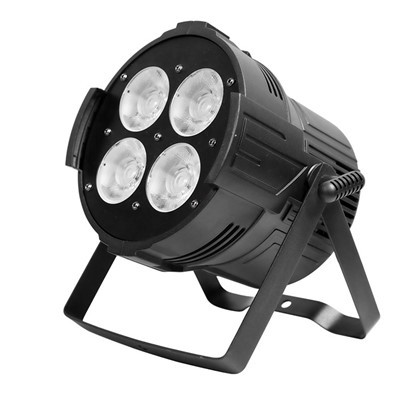
At the end of the day, industrial lighting isn’t just about putting light somewhere. It’s about keeping workers safe, reducing downtime, and cutting costs. LED Par lights check all those boxes, but only if you use them right. Don’t waste another year on old tech that’s holding your business back. If you’re ready to switch, reach out to me to talk through your specific needs—whether you’re a small workshop or a large warehouse, I’ve got the right LED Par lights for you, and I’ll make sure they’re installed correctly so you get the maximum savings and safety.
Indoor LED COB Face Light References:
- U.S. Department of Energy. (2023). Industrial Lighting Efficiency: LED Technology for Warehouses and Factories.
- Illuminating Engineering Society (IES). (2022). Lighting Guidelines for Industrial Workspaces and Safety.
- National Electrical Manufacturers Association (NEMA). (2021). IP Rating Standards for Industrial Lighting Fixtures.
- Energy Star. (2023). Commercial LED Lighting Performance and Longevity Data.
- Occupational Safety and Health Administration (OSHA). (2022). Lighting Requirements for Manufacturing and Industrial Facilities.
Guangdong New Start Lighting Co., Ltd.
Guangdong New Start Lighting Co., Ltd. is one of the most professional led par light manufacturers and suppliers in China. Welcome to wholesale durable led par light in stock here and get quotation from our factory. All customized products are with high quality and competitive price.
Address: No.2, Hubin Road, Jiaoxin Village, Shimen Street, Baiyun District, Guangzhou, Guangdong, China
E-mail: newstartkate@gmail.com
WebSite: https://www.newstartlighting.com/
