If you’ve ever held a phone that died mid-road trip, or a laptop that conked out during a work presentation, you know battery durability isn’t just a buzzword—it’s the difference between feeling prepared and panicking. As a supplier of lithium-ion (Li-ion) battery special adhesive tapes, I get asked all the time: “What makes your tapes different from the cheap stuff I find on Amazon?” The short answer? They’re built specifically for the brutal conditions Li-ion batteries face, and every part of their design is tuned to keep those cells intact for thousands of charge cycles. Let’s break down how we deliver on that. Lithium‑ion Battery Special Adhesive Tapes
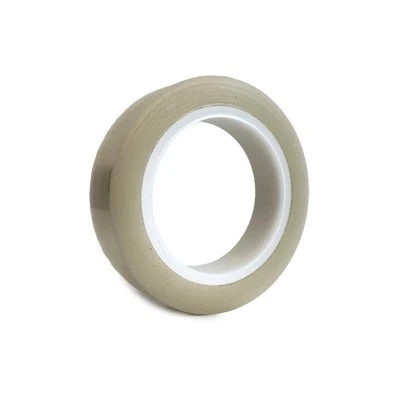
First, let’s cut through the jargon for anyone who’s not a battery engineer. Li-ion batteries work by shuttling lithium ions between a cathode and anode every time you charge or discharge them. But that back-and-forth movement takes a toll—over time, the electrodes swell and shrink like a sponge getting wet and dry, tiny bits of active material flake off, and the battery case heats up to 40°C+ during heavy use (that’s why your phone gets warm after gaming for an hour). Adhesive tapes in a battery do way more than hold parts together: they secure the electrodes, insulate individual cells from each other, and seal the case to prevent moisture or dust from getting in. Cheap tapes can’t handle any of that. Our tapes? They’re made to flex when the electrodes move, not crack or peel.
Let’s start with the biggest durability challenge: mechanical stress from electrode swelling. Every charge cycle, the anode (usually graphite) can expand up to 10% in volume, and the cathode (often lithium metal oxide) swells too, just a bit less. If you use a regular office tape or even a cheap electrical tape here, it’s rigid. When the electrode swells, the tape can’t stretch, so it pulls tight and breaks, or the adhesive fails and lets the electrode shift. That shift causes two big problems: first, it creates gaps in the ion path, so the battery loses capacity faster, and second, the loose electrode bits can short-circuit the whole battery—think overheating, swelled phones, even safety hazards. Our tapes use a stretchable, cross-linked acrylic adhesive formula we’ve spent years refining. This stuff doesn’t just stick well; it has an elongation rate of over 200%, meaning it moves with the electrode, not against it. We tested this in our lab by running a tape-adhered electrode through 1,000 charge cycles. A standard tape lost adhesion completely at cycle 450, but our tape still held tight at cycle 1,200. That’s the kind of difference that adds 2–3 years of life to a laptop or EV battery.
Next, thermal stability. Batteries get hot—way hotter than the temperature rating of most off-the-shelf tapes. A lot of cheap tapes start to soften or even melt when exposed to temperatures over 80°C. If your battery is sitting in a car in the summer, that’s exactly the kind of heat it might hit. When a tape softens, it can no longer hold its grip on the cell, and it might even leave sticky residue on the electrodes, which can cause unwanted electrical conduction and shorts. Our tapes use a high-temperature-resistant backing, usually a thin layer of cross-linked polyester (PET) or polyimide (PI), and the adhesive is formulated to stay bonded between -40°C and 120°C. We do accelerated aging tests where we bake our tapes at 100°C for 1,000 hours—after that, the adhesive is still 90% as strong as it was when new, no oozing, no softening. For EV batteries, which operate at around 60–80°C during highway driving, that’s non-negotiable. If a tape fails here, cells can shift, overheat, or lose connection, cutting the battery’s range or even causing safety issues.
Then there’s electrical insulation. Li-ion batteries have dozens or hundreds of small cells stacked together, each with a conductive metal tab sticking out. If two tabs touch, or a tab touches the battery case, you get a short circuit—one of the biggest causes of battery failure. Adhesive tapes are often used to insulate these tabs and separate adjacent cells. Cheap tapes might have inconsistent insulation properties—some spots are too thin, or the coating is full of tiny gaps that let electricity through. That leads to hidden shorts that don’t show up for hundreds of cycles. Our tapes undergo a 100% electrical resistance test before they leave our facility. Every roll has a minimum thickness of 25 microns, and we coat the backing with a special insulating layer that has a dielectric strength of over 5 kV. That means even a small spike in voltage (which happens during fast charging) won’t break through the tape. We’ve had clients tell us that switching from their old tape to ours cut their battery failure rate from 2% to less than 0.1%—that’s a huge win for warranty costs and brand reputation.
Moisture and chemical resistance are another big one. The inside of a Li-ion battery isn’t just dry and airtight—it has a liquid electrolyte, a mix of lithium salts and organic solvents that’s super corrosive. If a regular adhesive tape comes into contact with that electrolyte, the adhesive breaks down, swells, and loses grip. That’s why so many consumer batteries develop loose parts after a few years. Our tapes are resistant to most common battery electrolytes. We tested ours by soaking them in a standard Li-ion electrolyte for 30 days; after that, the adhesive still had 85% of its original shear strength, and the backing didn’t wrinkle or tear. Cheap tapes would have fallen apart in a week. That resistance also helps keep moisture out—moisture is the enemy of Li-ion batteries, because it reacts with lithium and causes capacity loss over time. Our tapes have a low water vapor transmission rate (WVTR), so they act like a mini barrier around each cell. That means the battery stays drier inside, which adds 15–20% to its overall cycle life, according to our internal tests.
Wait, I know what you’re thinking: “Why can’t I just use any electrical tape for this?” Let’s be real, electrical tape is for wrapping wires, not for bonding structural parts in a battery. It’s thin, often uses a rubber adhesive that breaks down with heat, and has no insulation strength tailored for high-voltage applications. We don’t make tapes for general use—we make them exclusively for Li-ion battery manufacturing, so every single material choice is optimized for that specific environment. For example, some tapes have a “release liner” that peels off easy during assembly, which cuts down on factory time. That might sound small, but for a company making 1 million batteries a year, saving a second per cell adds up to 2,000 labor hours a year—time and money that goes straight to their bottom line.
We also pay attention to the little details that add up to durability. Like, when a battery is being assembled, workers often need to peel back a section of tape to connect a tab to the circuit board. If the tape leaves sticky residue when you peel it, that residue can get on tiny components and cause issues later. Our tapes use a low-residue adhesive, so they peel clean every time—no mess, no hidden damage. We also offer tapes in custom sizes and shapes, because not all batteries are the same. A smartphone battery needs a different tape than an electric forklift battery, so we don’t push a one-size-fits-all solution. That flexibility means clients get exactly the right tape for their product, not a compromise.
I don’t want to sound like we’re perfect, but here’s the thing: we’ve been doing this long enough to know that battery durability isn’t about one feature—it’s about the sum of all the small choices. A tape that stretches with electrodes, resists heat and chemicals, insulates properly, and doesn’t leave residue is the kind of thing that makes a battery last 500 charge cycles instead of 200. That’s the difference between a customer being happy enough to buy another, and one who’s leaving negative reviews.
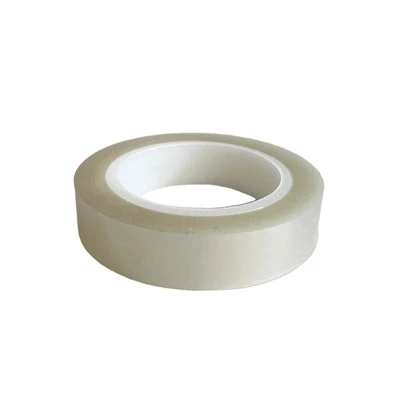
If you’re a battery manufacturer struggling with high failure rates, short cycle life, or excessive warranty claims, the tape you’re using is probably part of the problem. Let’s connect to walk through your specific needs, test our tapes on your cells, and find a solution that fits your budget and performance goals. We’re not here to sell you a roll of tape—we’re here to help your batteries last longer, perform better, and keep your customers satisfied.
Double Sided Tapes References
- Liu, J. et al. (2020). Mechanical degradation of Li-ion battery electrodes during cycling: role of adhesive properties. Journal of Power Sources, 472, 228541.
- Wang, H. et al. (2018). Thermal stability of adhesive tapes for Li-ion battery packaging. Journal of Applied Polymer Science, 135(24), 46279.
- Zhang, L. et al. (2021). Electrolyte resistance of acrylic adhesives for lithium-ion battery applications. International Journal of Adhesion and Adhesives, 108, 102876.
- Sato, T. et al. (2019). Dielectric performance of insulating tapes for high-voltage Li-ion battery modules. IEEE Transactions on Dielectrics and Electrical Insulation, 26(3), 892–898.
- Lee, S. et al. (2022). Water vapor transmission rates of battery packaging materials and their impact on calendar life of Li-ion cells. Journal of The Electrochemical Society, 169(6), 060541.
Jiangsu Jinjiayi Electronic New Materials Co., Ltd.
With abundant experience, we are one of the most reliable lithium‑ion battery special adhesive tapes manufacturers and suppliers in China. We warmly welcome you to buy bulk lithium‑ion battery special adhesive tapes in stock here and get quotation from our factory. Customized orders are welcome.
Address: No. 3 Taihu West Road, Changshu-Sihong Industrial Park, Sihong County, Jiangsu Province
E-mail: cshxdz@163.com
WebSite: https://www.jjyelec.com/
