If you’ve ever spent time around water management projects—think flood control, drainage work, pond maintenance, or even erosion control along rivers or canals—you might’ve wondered what kind of heavy gear actually pulls off that tricky, space-sensitive work. A lot of folks default to big bulldozers or excavators for these jobs, but let me tell you, as a track skid steer loader supplier who’s worked with contractors, municipalities, and conservation groups for years, those full-size machines often are more hassle than they’re worth. That’s where track skid steer loaders come in, and they’re way more versatile for water management than most people realize. Let’s break down why these compact, tracked workhorses are a game-changer for every kind of water project you can think of. Track Skid Steer Loader
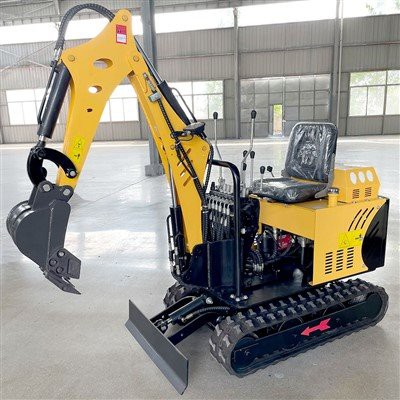
First, let’s get one thing straight: track skid steers aren’t the same as their wheeled cousins. Wheeled skid steers can slip and slide on wet, muddy ground, which is basically a death sentence for water work where you’re often dealing with soggy terrain around streams, retention ponds, or storm drains. The tracks on our loaders distribute their weight over a much wider area—usually around 3 to 4 PSI, which is less pressure than most adult foot traffic. That means they don’t sink into soft, waterlogged soil, they don’t tear up vegetation banks (which is a huge deal for keeping erosion at bay), and they can actually access areas full-size machines can’t. I’ve had a contractor call me last spring because his 30-ton excavator got stuck half-submerged in a retention pond’s edge while clearing out debris, and he had to rent a whole tow truck to get it out. The next week, he rented one of our track skid steers for the same job—same 2,000-lb lift capacity, same tough hydraulics—and it floated right over the soft mud without even sinking an inch. That’s the kind of access you can’t beat for water management.
Let’s start with the most common water management task: stormwater and flood control. Every city and town deals with clogged storm drains, overflowing retention basins, and stormwater runoff that carries sediment and pollutants into local waterways. Track skid steers are perfect for clearing out that kind of junk—they can fit into the tight spaces between street curbs, around parking lot drainage inlets, and along narrow ditch banks where big dozers can’t squeeze. Plus, with the right attachments, you can do way more than just scoop up mud and leaves. We sell a lot of our track skids with hydraulic brush cutters for clearing overgrown vegetation along ditch lines—stuff that would otherwise block water flow and cause flooding during heavy rains. I had a small town public works crew come to us last summer; they’d been using a pickup with a trailer-mounted mower to clear 12 miles of roadside ditches, but that mower couldn’t cut down thick brush or saplings that were blocking 30% of the ditch flow. Their track skid with a brush cutter took half the time, and they could get within a foot of the ditch’s edge without eroding the bank, which is way better for long-term flood control. Another big attachment for flood work: a grapple bucket. Those let you yank out fallen trees, large rocks, and debris that’s washed into streams during storms, all without damaging the banks. That’s way more precise than an excavator, which can accidentally scrape away whole chunks of the bank if the operator isn’t careful.
Next up: pond and lake maintenance. A lot of people think maintaining a pond is just mowing the grass around it, but real water management means getting into the water to clean out sediment, remove invasive aquatic plants, and repair eroded shorelines. Track skid steers do all this without disturbing the pond’s delicate ecosystem (or sinking into the muddy bottom). For sediment removal, that’s a huge job—ponds fill up with silt over time, which reduces their capacity to hold water, leading to overflow and flooding. Full-size dredges are expensive, take forever to set up, and can stir up all kinds of muck that kills fish and plants. Our track skid loaders paired with a sediment bucket can get right into the shallow parts of the pond, scoop out muck, and dump it off on shore—no dredge needed, way less disruption to the water. One homeowner with a 5-acre pond told me he tried hiring a dredge for his annual cleanup, and it cost him $15,000 and left his pond murky for three months. He rented our track skid for two weeks, did the same job for $2,500, and only had to drain 2 feet of water from the pond (which he was going to do anyway for spring maintenance) to get it in. Even better, if you’re dealing with invasive plants like water hyacinth or cattails that take over shallow areas, you can attach a flail mower to your track skid to cut them down at the root, or a debris rake to pull them out without leaving pieces that regrow. The flotation from the tracks means you can work right at the water’s edge, so you don’t have to build a temporary platform just to get equipment there.
Erosion control is another big piece of water management, and here’s where track skid steers really shine. Erosion along shorelines, road ditches, and riverbanks doesn’t just ruin property—it sends sediment into waterways, clogs fish habitats, and causes even more flooding downstream. To fix erosion, you need to do two things: stabilize the soil with plants or structural materials, and make sure water flows away from the area properly. Track skids can handle both steps. For example, if you’re repairing a eroding riverbank, you can use a tracked loader to place riprap (large rocks) along the edge, which is way more precise than a big machine that could knock more rocks loose and make the problem worse. Or, if you’re planting native grasses or shrubs to hold soil in place, the narrow footprint of a track skid doesn’t compact the soil like a wheeled machine or a full-size dozer. Compacted soil is bad because it doesn’t absorb water, so you end up with more runoff and more erosion—something water management teams work really hard to avoid. We also sell a lot of our track skids with soil conditioners for prepping areas for native plantings; they till the top layer of soil, mix in compost or mulch, and leave the soil loose enough for seeds to take root, all without damaging the underlying structure that prevents erosion.
Wait, but what about deep water? Can a track skid actually go into water that’s more than a few inches deep? Great question. Most of our track skid models have ground clearances of 10 to 14 inches, and their tracks are designed to keep them buoyant in water up to about half the height of the undercarriage—so up to 7 inches of water, roughly. If you need to work in deeper water, you can get flotation kits for the tracks that increase buoyancy, letting you work in up to 18 inches of water without sinking. That’s enough for most pond and shallow stream work. If you need to go deeper, a tracked skid steer can load materials onto a barge or a floating platform that’s capable of handling deeper water, so you’re not hauling the whole machine into the deep end. We’ve also worked with a wetland restoration group that uses their track skid on a small floating barge to plant sedges and rushes in 2-foot-deep marshes—something no full-size machine could do without damaging the wetland habitat.
Now, let’s talk about cost, because that’s a big factor for most water management projects, whether it’s a municipal crew or a private landowner. Track skid loaders are way cheaper to rent or buy than full-size excavators or dozers, and they use less fuel—most of our models get 2 to 3 gallons of diesel per hour, compared to 10 to 15 gallons for a 30-ton excavator. Plus, since they’re compact, you can haul them on a standard 16-foot flatbed trailer, no special permits needed. A lot of our customers tell us that the biggest hidden cost of big machines for water work is the damage they cause to the site. If a big dozer tears up a bank or compacts soil so bad that native plants can’t grow, you’re looking at thousands of dollars in extra restoration work. Track skids minimize that damage, so you save money in the long run. I had a county road crew that used to rent a small dozer for ditch clearing, but every time they used it, they’d have to pay $500 to repair eroded banks and reseed the area. After switching to our track skid, that extra cost went down to less than $100 a year because they could work right along the edge without tearing it up.
Of course, no piece of equipment is perfect, and track skid steers have their limits. They don’t have the lift capacity of a full-size crane or excavator, so you can’t move very large rocks or huge tree trunks with them. For large-scale dredging of deep ponds, you still need a dedicated dredge, though a track skid can help load the dredged material onto trucks. And while they work great in shallow water, they’re not designed for deep open water, so you still need a barge for that kind of work. But for 80% of the water management jobs we see—ditch clearing, pond sediment removal, shoreline repair, debris cleanup—they’re more than capable, and way more practical than bigger machines.

At the end of the day, water management is all about working smart, not just working big. You need equipment that can get into tight spaces, handle wet, soft terrain, and do precise work without causing more problems than it solves. Track skid steer loaders check all those boxes. As a supplier, we’ve seen these machines turn around small town flood projects, help private landowners restore their ponds, and make wetland conservation projects way more efficient. If you’re working on a water management project and you’re tired of dealing with stuck big machines, high costs, and site damage, a track skid loader is worth checking out. We’re here to help you figure out the right model and attachments for your specific project, no matter how big or small. Feel free to reach out to our team to talk through your needs, compare rental vs purchase options, or get a demo—we’re happy to help you find the gear that works for your water management goals.
Mini Excavator References:
- National Association of Drainage Contractors. (2022). Compact Track Loaders for Agricultural and Municipal Drainage Projects. NADC Technical Bulletin 2022-04.
- U.S. Environmental Protection Agency. (2021). Best Management Practices for Stormwater Runoff Reduction: Compact Equipment Usage Guide. EPA Office of Water.
- American Society of Agricultural and Biological Engineers. (2020). Terrain Pressure and Soil Compaction for Compact Tracked Construction Equipment. ASABE Transactions, Vol. 63, No. 5.
Shandong Grant Machinery Equipment Manufacturing Co., Ltd.
We’re well-known as one of the leading track skid steer loader manufacturers and suppliers in China. We warmly welcome you to wholesale discount track skid steer loader for sale here from our factory. If you have any enquiry about quotation, please feel free to email us.
Address: Shenglu Light Industry Park, Xiaoxue Sub-district, Qufu City, Jining City, Shandong Province, China
E-mail: info@grantmech.com
WebSite: https://www.grantmachinery.com/
