If you’ve ever stopped to read the fine print on a soda bottle, a jar of pickles, a tube of toothpaste, or even a bottle of liquid hand soap, you’ve almost certainly seen sodium benzoate listed as an ingredient. For years, my team and I have supplied sodium benzoate to food manufacturers, cosmetic formulators, and industrial product makers, and one question comes up more often than any other: “Why does hygroscopicity matter for sodium benzoate, and how does it impact how I use or store this ingredient?” Today, I want to break that down in plain, practical terms—no overly jargon-heavy lectures, just what every user of sodium benzoate needs to know about its ability to attract and hold moisture, and how that affects both your processes and the finished products you ship to consumers. Sodium Benzoate
Let’s start with the basics, because hygroscopicity is a property that shapes so much of how we handle powdery chemical ingredients. Put simply, hygroscopicity is the measure of a substance’s ability to draw water molecules from the surrounding air. Some materials—like anhydrous calcium chloride—are highly hygroscopic; they’ll pull so much moisture from the air that they’ll eventually dissolve into a liquid. Others are only slightly hygroscopic, meaning they might absorb a tiny amount of water from the air under specific conditions, but it has almost no effect on their physical properties. Sodium benzoate falls somewhere in this middle range, though the exact level of its hygroscopicity isn’t one-size-fits-all—it depends on a few key factors that make a huge difference for anyone working with it.
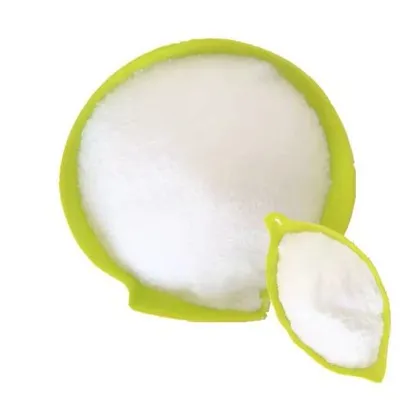
First, let’s ground this in the science of sodium benzoate itself. Chemically, sodium benzoate is the sodium salt of benzoic acid, with the molecular formula C6H5COONa. It’s a white, odorless (or faintly sweet-smelling) crystalline powder at room temperature, and its primary industrial and food-grade use is as a preservative. Benzoic acid is poorly soluble in water, so when it reacts with sodium hydroxide to form sodium benzoate, the resulting salt is highly water-soluble, which is why it works so well as a preservative in aqueous products like sodas, salad dressings, and liquid cosmetics. That high water solubility is directly tied to its hygroscopic nature, because the charged ions in sodium benzoate (the sodium cation and benzoate anion) form weak bonds with polar water molecules, making it easy for the compound to attract and retain moisture from the air.
But here’s the part most people don’t learn in basic chemistry: the hygroscopicity of sodium benzoate isn’t a fixed number. It varies based on two critical factors that we as suppliers control closely in our manufacturing process: particle size and purity. Finer-grained sodium benzoate has a much higher surface area relative to its volume, which means there are more exposed molecules on the powder’s surface ready to bond with water molecules in the air. That’s why a 100-mesh fine sodium benzoate will absorb moisture far faster than a coarser 40-mesh product, all else being equal. Purity plays a role too: small amounts of residual salts or moisture from the manufacturing process can increase the hygroscopic tendency, while our refining process removes those impurities to create a more stable, less moisture-prone product. For our customers, this means that when you order sodium benzoate from us, you can specify a particle size that matches your needs—whether you need a fine powder for easy dissolution in liquid products or a coarser grade for dry blends, and we can tailor the hygroscopicity to your process.
Now, why does this matter to you as a manufacturer or formulator? Let’s walk through real-world examples, because I’ve seen firsthand how hygroscopicity can throw a wrench in operations if it’s not accounted for. Take food and beverage manufacturers first, which make up a large portion of our customer base. Many small-batch craft soda makers, for example, might buy sodium benzoate in 25kg bags and store them in a non-climate-controlled warehouse or production area. If the air in that space is high in humidity—say, above 60% relative humidity—over the course of a few weeks, the sodium benzoate will absorb enough moisture to clump together into hard, cakey masses. That sounds trivial, but it’s not: clumped sodium benzoate won’t dissolve evenly in your soda syrup batches, leading to inconsistent preservative levels across bottles. Too little sodium benzoate can lead to bacterial growth and spoiled product, while too much can leave a bitter aftertaste that turns consumers away. I’ve had a craft soda client tell me a few years ago that they had to throw out three batches of syrup because their sodium benzoate had clumped from high warehouse humidity, and it was one of the most frustrating (and costly) mistakes they’d made.
For cosmetic and personal care product makers, the impact is similar but different. Many liquid soaps, shampoos, and facial serums use sodium benzoate as a preservative to prevent mold and yeast growth. If the sodium benzoate you add to your formula has absorbed extra moisture from the air before it’s mixed in, you’re not just risking uneven distribution—you’re also changing the overall water content of your batch. For thick creams or lotions, that extra unaccounted-for moisture can alter the viscosity of the product, making it runnier or thicker than your original formulation, leading to inconsistent texture and customer complaints. Industrial users of sodium benzoate, like those making concrete admixtures or metal coatings, face different issues: hygroscopic sodium benzoate can add unintended water to their mix, which can weaken concrete strength or alter the chemical reaction in coating applications, leading to product failure in the field.
That said, hygroscopicity isn’t all bad—if you work with it, not against it. The key is understanding how to mitigate its effects, and as a supplier, we work with every customer to develop storage and handling guidelines tailored to their specific product and process. Let’s talk about what actually causes sodium benzoate to absorb moisture, because that’s the first step to preventing it. Sodium benzoate will only absorb moisture when the relative humidity (RH) of the surrounding air is above its “equilibrium relative humidity,” or ERH. For most standard food-grade sodium benzoate, that ERH is around 60% at 25°C (77°F). That means if your storage area has an RH below 60%, the powder will stay dry and free-flowing indefinitely. If it goes above that, it will start drawing in moisture. That’s a simple rule of thumb that we share with every customer, and it’s saved so many of them from headaches. We recommend storing sodium benzoate in airtight, high-density polyethylene (HDPE) bags or drums—our standard packaging includes a heat-sealed inner liner that creates a barrier against moisture, and for customers operating in very high humidity environments, we offer extra-dry packaged sodium benzoate with a desiccant packet included in each drum, which absorbs any stray moisture that gets in.
Another way we help our customers work with hygroscopicity is through our product customization options. If you’re a formulator working on a dry powder blend—like a powdered drink mix or a baking mix—that needs sodium benzoate that stays free-flowing during storage, we can produce a granular sodium benzoate with a slightly larger particle size and a thin, inert coating that reduces surface exposure to air. That doesn’t change its ability to act as a preservative, but it slows down moisture absorption enough for dry blends to stay stable for their shelf life. For liquid formulations, we advise customers to add sodium benzoate to the water phase of their batch first, before adding other ingredients, to ensure it dissolves completely, and to avoid adding it to wet ingredients that could already have high moisture content. We also work with clients to calculate exactly how much sodium benzoate they need, so they don’t have to stock more than they can use in a month or two—reducing the time the powder sits in storage and is exposed to fluctuating humidity.
I want to be transparent here, because as a supplier, we know that trust is built on honesty. Sodium benzoate is hygroscopic, yes, but that’s not a flaw—it’s a natural chemical property that’s predictable and manageable. Over the 12+ years my team has been supplying sodium benzoate, we’ve seen that most issues aren’t with the product itself, but with how it’s stored and handled. For example, we had a large bakery client a few years ago that was complaining that their sodium benzoate was clumping every summer, when their production facility’s air conditioning failed and humidity spiked. Instead of switching to a different supplier, they called us, and we worked with them to install small dehumidifiers in their storage area, adjust their ordering frequency to get smaller, more frequent shipments, and switch to our granular, low-hygroscopicity grade. The clumping stopped immediately, and they’ve been a repeat customer ever since. That’s the kind of partnership we strive for—not just selling a product, but helping our customers solve the real challenges that come with using it.
Let’s also address a common misconception: many people think that hygroscopicity means sodium benzoate is unsafe, or that it will spoil faster. That’s not true at all. When stored correctly, in airtight, low-humidity conditions, sodium benzoate has a shelf life of two to three years, just like most other powdered preservatives. The moisture it absorbs is only from the air, not from contamination, and as long as it’s within its shelf life and hasn’t clumped severely, it’s still safe to use as intended. The FDA and other global regulatory bodies like EFSA have approved sodium benzoate for use in food, cosmetics, and pharmaceuticals, and its hygroscopic nature doesn’t impact its safety or effectiveness when handled properly. The only time safety becomes a concern is if it’s misused—like using clumped, unevenly dissolved sodium benzoate which leads to insufficient preservative levels, but that’s a process issue, not a product issue.
Another point that comes up often is how sodium benzoate’s hygroscopicity compares to other common preservatives. For context, sodium sorbate, another widely used preservative, is slightly less hygroscopic than standard sodium benzoate, while potassium sorbate is more hygroscopic. Calcium propionate, which is common in baked goods, has similar hygroscopicity to sodium benzoate. So if you’re comparing options, sodium benzoate falls right in the middle of the pack—manageable, but not entirely immune to moisture. That makes it a great all-around option, as long as you plan for its properties.
Now, if you’re reading this and you’re a formulator, production manager, or business owner working with sodium benzoate, you’re probably wondering: how do I apply this to my operation? First, start with the basics: check the relative humidity of your storage and production areas. Invest in a cheap hygrometer to track RH—if it’s consistently above 55-60%, you’ll need to add dehumidification or adjust your packaging. Second, order the right grade for your use case: if you’re making liquid products, fine powdered sodium benzoate works best, but if you’re making dry blends, go for a granular grade. Third, work with a supplier that understands these properties, not just sells a generic product. We test every batch of sodium benzoate we produce for moisture content and hygroscopicity, so we can send you a CoA (Certificate of Analysis) that confirms its properties, and we’re always available to answer questions about storage, handling, or process adjustments.
At the end of the day, hygroscopicity isn’t a feature of sodium benzoate that you have to fear—it’s a property that, once understood, can be planned for, and even leveraged in some cases. For example, some industrial applications use sodium benzoate’s ability to absorb moisture to control curing rates in concrete admixtures, or to regulate moisture in powdered cleaning products. The key is partnering with a supplier that knows the ins and outs of their product, can tailor it to your needs, and will stand by you when you run into a challenge.
If you’re looking for a reliable, consistent source of sodium benzoate, and you want to work with a team that’s as focused on solving your production challenges as we are on providing a high-quality product, we’d welcome the chance to connect. Whether you need a small test shipment for a new formulation, a bulk order for your production line, or just guidance on how to adjust your storage to reduce clumping and inconsistency, we’re here to help. Reach out to our team to discuss your specific requirements, and let’s build a partnership that works for both your business and your customers.
Acidulants References
- American Chemical Society. (2004). Sodium Benzoate. In Kirk-Othmer Encyclopedia of Chemical Technology.
- EFSA Panel on Food Additives and Nutrient Sources added to Food (ANS). (2013). Scientific opinion on the re-evaluation of sodium benzoate (E 211) as a food additive. EFSA Journal, 11(10), 3422.
- Rowe, R. C., Sheskey, P. J., & Quinn, M. E. (2009). Handbook of Pharmaceutical Excipients (6th ed.). Pharmaceutical Press.
- Smyth, H. F., & Schwarcz, W. (1948). The hygroscopicity of pharmaceutical salts. Journal of the American Pharmaceutical Association, 37(10), 425-430.
- Food and Drug Administration. (2022). Food Additives Permitted for Direct Addition to Food for Human Consumption. 21 CFR Part 172.
Fudijia (Tianjin) Supply Chain Co., Ltd.
With abundant experience, we re one of the most professional sodium benzoate manufacturers and suppliers in China. We warmly welcome you to wholesale bulk high quality sodium benzoate made in China here from our factory. For more information, contact us now.
Address: 301-2-1C,Jin Bin Jie Zuo,No.98, Huanghai Road,TEDA, Tianjin, China
E-mail: foodchem@hjlfoods.com
WebSite: https://www.ifoodchem.com/
