As a seasoned supplier in the driving chain industry, I’ve witnessed firsthand the crucial role these components play in countless mechanical systems. One of the most frequent questions I encounter from customers is about the difference between single – strand and multi – strand driving chains. Today, I’d like to delve into this topic and provide a comprehensive comparison to help you make informed decisions for your specific needs. Driving Chain
Structure and Design
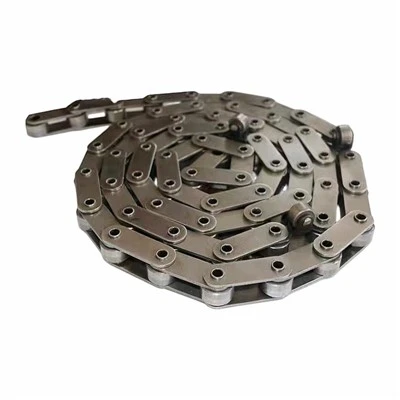
At the most basic level, the difference between single – strand and multi – strand driving chains lies in their structure. A single – strand chain consists of a single row of chain links, connected end – to – end. This simple design is straightforward and easy to install. Each link is interconnected in a linear fashion, allowing for smooth movement along the sprockets.
On the other hand, a multi – strand chain is composed of multiple parallel rows of single – strand chains that are attached to each other. These additional rows are placed side by side, sharing the same set of pins or bushings. The number of strands can vary, commonly ranging from two to six or more, depending on the application requirements.
Strength and Load – Bearing Capacity
When it comes to strength, multi – strand chains clearly have an edge over single – strand chains. The multiple rows of links in a multi – strand chain distribute the load more evenly. In a mechanical system, the load is divided among the individual strands. For example, in a two – strand chain, each strand only needs to bear approximately half of the total load compared to a single – strand chain under the same conditions.
This load – sharing characteristic enables multi – strand chains to handle much higher loads. In heavy – duty applications such as industrial machinery, large – scale conveyors, and agricultural equipment, where high torque and substantial power transmission are required, multi – strand chains are often the preferred choice. They can operate reliably under extreme conditions, minimizing the risk of chain failure.
Single – strand chains, while less capable of handling heavy loads, are still suitable for many light – to medium – duty applications. They are commonly used in household appliances, small – scale conveyors, and some automotive accessories where the load requirements are relatively low.
Speed and Efficiency
In terms of speed, both single – strand and multi – strand chains can operate at a wide range of velocities. However, single – strand chains tend to have a slight advantage in high – speed applications. Due to their simple structure, they experience less internal friction compared to multi – strand chains. With fewer rows of links and less contact area between the chain and the sprockets, single – strand chains can achieve higher speeds with reduced energy losses.
Multi – strand chains, because of their more complex structure and increased contact area, may generate more heat and friction at high speeds. This can lead to a decrease in efficiency and potentially cause premature wear of the chain and sprockets. However, advancements in manufacturing technology have significantly improved the high – speed performance of multi – strand chains, making them suitable for many high – speed, high – power applications as well.
Noise and Vibration
Noise and vibration are important considerations in many applications, especially in environments where a quiet operation is desired. Single – strand chains generally produce less noise and vibration compared to multi – strand chains. Their simpler design results in a more uniform movement and less interaction between the chains and sprockets, leading to a smoother and quieter operation.
Multi – strand chains, with their multiple rows of links, may experience more uneven loading and movement, which can lead to increased noise and vibration levels. However, proper installation, tension adjustment, and the use of high – quality materials can help mitigate these issues. Additionally, in some heavy – duty applications where noise is less of a concern, the benefits of a multi – strand chain’s high load – bearing capacity often outweigh the potential noise drawbacks.
Cost
Cost is always a significant factor in any purchasing decision. Single – strand chains are typically more cost – effective than multi – strand chains. The manufacturing process for single – strand chains is simpler, requiring less material and fewer production steps. This simplicity translates into a lower price point, making them an attractive option for budget – conscious customers.
Multi – strand chains, due to their more complex design and higher material requirements, are generally more expensive. However, when considering the overall cost, it’s important to take into account the application requirements. In some cases, the additional cost of a multi – strand chain may be justified by its longer lifespan, higher load – bearing capacity, and ability to handle demanding operating conditions.
Maintenance
Maintenance is another aspect where the two types of chains differ. Single – strand chains are relatively easy to maintain. Their simple structure makes it easier to inspect individual links for wear and damage. Replacement of a single – strand chain is also straightforward, and it can often be done without the need for specialized tools or extensive disassembly of the machinery.
Multi – strand chains, while also requiring regular maintenance, may be more challenging to manage. Inspecting all the strands for uniform wear is crucial, as uneven wear can lead to premature chain failure. In some cases, replacing a single strand in a multi – strand chain may not be sufficient, and an entire chain replacement may be necessary. However, with proper maintenance and inspection, multi – strand chains can provide reliable service for a long time.
Applications
The choice between single – strand and multi – strand driving chains ultimately depends on the specific application. Single – strand chains are commonly used in scenarios where the load is relatively light, speed is a priority, or cost is a major concern. Some examples include small – scale food processing equipment, printing presses, and certain types of home workshop machinery.
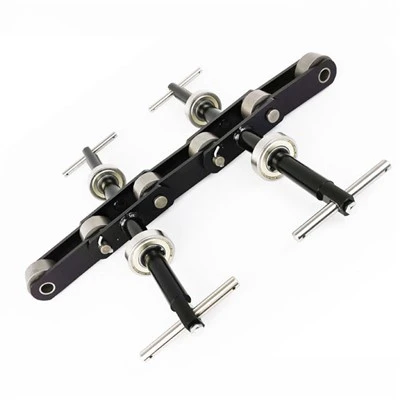
Multi – strand chains find their applications in heavy – duty environments where high load – carrying capacity is essential. They are widely used in construction equipment, mining machinery, large – scale power transmission systems, and heavy – load conveyors. These applications require a chain that can withstand extreme forces and operate reliably under demanding conditions.
As a driving chain supplier, I understand that choosing the right chain for your application is crucial for the performance and longevity of your equipment. Whether you need a single – strand chain for a light – duty application or a multi – strand chain for a heavy – duty project, I can provide you with high – quality products that meet your specific requirements.
Rack If you’re in the process of selecting a driving chain for your machinery or have any questions about the differences between single – strand and multi – strand chains, I encourage you to reach out to me. I’m here to offer expert advice and help you make the best decision for your business. By working with me, you can ensure that you get a driving chain that delivers optimal performance and reliability.
References
- "Chain Design Handbook" by the American Chain Association
- "Mechanical Power Transmission" by Robert L. Nisbett
- "Industrial Chain Technology" published by the Chain Manufacturer’s Institute
Anhui Huihuang Chain Transmission Co., Ltd.
Anhui Huihuang Chain Transmission Co., Ltd. is one of the most professional driving chain manufacturers and suppliers in China, also supports high quality customized service. Please feel free to buy discount driving chain made in China here from our factory. Welcome to contact us for pricelist and free sample.
Address: NO.3 YONGQIANG ROAD. JIXI.ANHUI.CHINA
E-mail: 754590660@qq.com
WebSite: https://www.hhchains.com/
