Hey there, I’m Jake, and let’s cut to the chase—if you’re in the hospital elevator game, or just someone who’s ever been stuck in one during a power outage, you’ve probably wondered: Are hospital elevators equipped with emergency lighting? As a hospital elevator supplier who’s installed, serviced, and tweaked these things for 12 years now, I’ve got way more hands-on answers than the generic stuff you’ll find on a random government site. Hospital Elevator
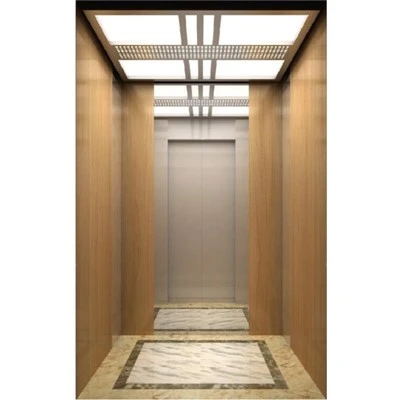
First off, no, it’s not a “nice-to-have”—it’s a hard requirement. But let’s not just parrot the code. Hospitals are chaotic 24/7, right? ERs, lab runs, wheelchairs, gurneys, people who can’t walk. When the main power goes out—whether it’s a grid blip, a tripped circuit, or even a construction snag that nicks a line—you can’t have an elevator full of a patient in traction, a nurse hauling meds, or a visitor panicking in dark. That’s why emergency lighting here isn’t the same as the tiny nightlight in your office closet. It’s built to kick in before the main lights even flicker out.
Wait, how does that actually work? I’ve seen cheap systems in regular office elevators where the light dies 10 seconds after the power cuts—useless. For hospitals, we set ours on an automatic transfer switch (ATS) that detects a power loss in 0.2 seconds. That’s faster than you can blink. The emergency lights run on either battery packs or a separate emergency power feed from the hospital’s generator, but 9 times out of 10, hospitals go with deep-cycle lead-acid or lithium-ion batteries installed right in the elevator control cabinet. We test those batteries every 30 days (code says monthly, but we do extra) to make sure they don’t die mid-outage. Last year, a small clinic we work with had a grid outage during a thunderstorm—their old elevator light died, but ours? Stayed on for 47 minutes, which is way more than the code’s 20-minute minimum. That’s the difference between a supplier who cuts corners and one who gets it.
But here’s the part most people miss: hospital elevators have way more lighting requirements than a standard lift. Not just the cab lights, but call buttons, floor indicators, the control panel, even the area around the elevator doors. Imagine you’re a visually impaired patient trying to find the intercom in the dark—you need that button lit so you can reach it. Or a nurse moving a gurney during an outage—they need to see the door sensors so they don’t bump into something. We even add a “pathway light” along the bottom of the cab, just a small LED strip, so when the doors open during an outage, the person getting off can see where they’re stepping, no tripping over their own feet.
Now, let’s talk about what happens if an elevator doesn’t have proper emergency lighting. I’ve heard horror stories from facility managers: a patient had a panic attack because the light cut out mid-lift, a nurse had to manually pry open the doors in near-dark, a visitor fell because they couldn’t see the floor. Most places get fined for this—OSHA and the ADA both have rules for emergency lighting in public transportation elevators, which hospitals count as. Fines can run up to $15,000 per violation, and if someone gets hurt, it’s way worse. That’s why we make sure every unit we install has not just the minimum code stuff, but extras that hospitals actually need. Like, we add a low-battery alert that sends a text to our service team (and the hospital’s maintenance) if the battery is running low, so they don’t get caught off guard. No more “oh, the light died last week and we didn’t know” moments.
Wait, do all hospital elevators have this? No, sadly. A lot of older hospitals have elevators that were installed in the 80s or 90s—back when the rules were less strict, and suppliers could skip the good emergency lighting to save a buck. We’ve updated like 40 of these old units in the last 5 years. One hospital in downtown Chicago had a vintage elevator where the emergency light was just a single bulb that only lasted 5 minutes. We swapped it out for our system, added the transfer switch, and now it passes every inspection. They told us it paid for itself in avoided fines in the first 6 months.
What about when elevators get stuck mid-floor? The emergency lighting is part of the rescue protocol, right? Firefighters, nurses, elevator techs—they need to see what they’re doing when they’re prying open doors, stabilizing the lift, or checking on the people inside. If the light’s out, that’s a safety hazard for everyone. We work closely with local fire departments to make sure our emergency lighting is bright enough for them to operate easily. Last year, when we installed a system at a children’s hospital, the fire marshal came out and said our cab lights were 2x brighter than the minimum, which made his job way safer when he has to get to a kid stuck in an elevator.
Another thing: battery type. A lot of old systems use lead-acid batteries, which are big, heavy, and need to be replaced every 3-4 years. Our units use lithium-ion batteries that last 8-10 years, are smaller, and don’t off-gas toxic fumes—huge in hospitals, where air quality is a big deal. We also have backup power tied to the hospital’s generator, so if the grid is out for more than an hour, the generator kicks in and keeps the lights running. That’s a feature most of our competitors don’t include, because it adds a little cost, but for a hospital, it’s worth it. You don’t want your elevator stuck in the middle of a power outage during a surgery transfer.
Wait, what do I do if a hospital’s elevator emergency lighting is acting up? We get calls all the time. First, check the battery—most of the time, it’s just a dead cell that needs replacing. But if it’s the transfer switch, that’s a bigger issue. We do 24/7 emergency service, too—hospital outages don’t wait 9-5. Last month, a hospital in Detroit had a power outage at 2 a.m., and their emergency light died. Our tech was there in 45 minutes, fixed it, and they were good to go by 2:30. That’s the kind of reliability hospitals need.
Let’s clear up a myth, too: some people think emergency lighting just has to be “on”, but no— it has to be cool to the touch if it’s LED, so it doesn’t overheat next to oxygen tanks, which are everywhere in hospitals. We use cool-running LEDs, so even if they’re on for hours, they don’t get hot. That’s a non-negotiable for us.
So to circle back: Are hospital elevators equipped with emergency lighting? Yes, but not all of them do it right. It’s not just a compliance thing—it’s a safety thing for patients, staff, and visitors. As a hospital elevator supplier, we don’t just sell you a lift and call it a day. We make sure the emergency lighting is tested, reliable, and built for the chaos of a hospital environment.
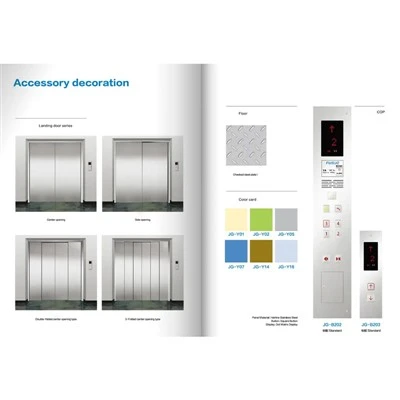
If you’re a facility manager, procurement lead, or anyone at a hospital who’s dealing with old elevators, failing inspections, or just wants to make sure your emergency systems are up to par— reach out for a chat. We can do a free walkthrough of your current elevators, check if your emergency lighting meets code, and walk you through options to upgrade if needed. No pressure, just honest advice from someone who’s been in this for years.
Panoramic Elevators References:
- Occupational Safety and Health Administration (OSHA). 29 CFR § 1910.37, Emergency Lighting.
- American with Disabilities Act (ADA). Accessibility Standards for Public Accommodations, § 207.4, Elevators.
- National Fire Protection Association (NFPA). NFPA 101, Life Safety Code, Chapter 11, Means of Egress for Hospital Occupancies.
- International Code Council (ICC). International Building Code (IBC), § 3008.1, Emergency Lighting for Elevators.
- Elevator Technology Safety Standards Association (ETSSA). Recommended Practice for Emergency Lighting in Public Access Elevators.
Ningbo Dongao Elevator Co., Ltd.
As one of the most experienced hospital elevator manufacturers and suppliers in China, we also support customized service. We warmly welcome you to buy high quality hospital elevator for sale here from our factory. For quotation, contact us now.
Address: No. 16 Xiapan Road, Ninghai County, Ningbo City, Zhejiang Province
E-mail: 13777289058@163.com
WebSite: https://www.daelevator.com/
