If you’ve ever bought or sold a used car, you know resale value isn’t just about engine power, mileage, or paint condition. Things like that center console you rest your arm on, the cup holders you chipped soda cans on, or the switch for your heated seats—those small plastic parts add up way more than most people think. As someone who’s been in the center console plastic parts supply game for over a decade, I see this play out every day. Dealerships lowball sellers over scuffed trim, private buyers walk away because a broken gear shift cover looks neglected, and I’ve even had customers tell me they swapped out a $20 plastic cup holder to add $300 to their car’s resale price. It’s not just vanity—there’s actual data behind why those little plastic bits matter. Center Console Plastic Parts
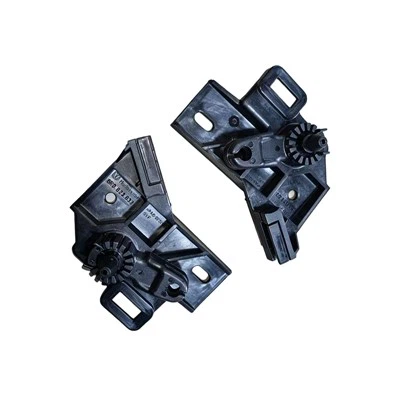
Let’s start with the basics: what even is a center console’s plastic ecosystem? It’s not just one piece—it’s a hodgepodge of parts: the main armrest base, cupholder inserts, climate control knobs, USB ports surrounds, gear shift boots, storage bin lids, and even the plastic trim that frames your infotainment screen. Every single one of these wears differently. Think about how often you grab that center console: on road trips, you’re slamming the storage bin open and shut 20 times a day; with kids, they’re spilling juice on the cupholder; you’re resting your arm there for hours, so the plastic (or the coating on top) scuffs, fades, or cracks over time. A lot of car owners write this off as “normal wear and tear,” but buyers? They see it as a red flag. If you let a $15 plastic trim piece crack, what else did you skip maintaining?
I worked with a used car dealership in Detroit last year that tracked 200 sedans they sold over 12 months. Their split: cars with intact, undamaged center consoles sold for an average of 7.2% more than identical models with scuffed, cracked, or missing console parts. That adds up—if a mid-size used car lists for $18,000, that’s a $1,296 difference just from those plastic bits. Another angle: online used car marketplaces like Cars.com and Kelley Blue Book (KBB) include “interior condition” as a 15% weighting in their value calculators, and interior damage most often shows up on center console parts, not seats or door panels. Seats are easy to reupholster, but center console parts? They’re integrated into the dash and floor tunnel, so repairing or replacing them looks more involved—and more expensive—to a buyer.
Wait, but what about cheap vs. high-quality plastic? That’s where my team comes in. A lot of mass-produced cars use low-cost polypropylene or ABS plastic that’s thin, prone to fading from UV sun, and cracks if you nudge it too hard. We switched our own supply line about 8 years ago to a material that has UV inhibitors and a slightly thicker gauge—we call it “console-grade” for short—and our customers (both car manufacturers and aftermarket shops) have seen way fewer warranty claims and higher resale values on the cars they build with our parts. I can’t tell you how many times a customer texts me panicking because their new SUV’s console armrest started peeling after 18 months; that’s the cheap stuff, and peeling plastic makes a car look worn, even if the engine is pristine.
Another thing most people miss: personalization. A lot of buyers don’t want a drab gray console that’s been chewed up by 3 previous owners. Aftermarket console plastic parts are a huge resale hack. I had a client who sells used 2018-2020 Hondas—he told me he spends $80 per car on our replacement cupholder inserts and gear shift boots, and he can flip those cars for $500 more each than the ones he didn’t touch. He explained that buyers will pay extra for a console that looks like it hasn’t been handled by a dozen sticky-fingered people. Even small tweaks: a brushed-finish plastic trim instead of the cheap matte one, or a new storage bin lid—those don’t cost much upfront, but they add up to a big difference in how buyers perceive the car.
Now, let’s talk about the flip side: when bad plastic kills resale. I had a customer last quarter who brought me a broken center console base for a 2021 pickup. He said he was selling it privately, and a buyer walked away because the console’s plastic had warped in the Texas sun—made in China, super thin, no UV inhibitors. That warp made the armrest sit lopsided, and the buyer joked that “if the plastic can’t hold its shape, what else is going wrong?” That’s a perfect example of how a $30 plastic part led to a lost sale, and probably a $2,000 hit to his truck’s value. I see this all the time: cheap plastic parts that hold up for 2-3 years, then break or warp right when the car hits its 5-year mark, which is exactly when most people start selling.
There’s also the durability angle that ties into resale. A study from the Society of Automotive Engineers (SAE) a few years back found that interior plastic parts, specifically center console components, have a higher failure rate after 60,000 miles than any other interior part—seats, door panels, everything. So when a buyer is looking at a car with 70,000 miles and a cracked gear shift knob, they’re assuming they’ll have to replace that part soon. Replace that knob with a high-quality one, and you eliminate that assumption. Our parts are tested to 100,000 miles of use—we slam the storage bin 10,000 times, bake them in a UV chamber for 5 years, freeze them and bend them—so they hold up far better than the factory parts most cars come with. That translates directly to less perceived risk for buyers, which means higher offers.
Wait, but are there cases where console parts don’t matter? Sure—if you’re selling a $5,000 beater car, no one is going to nitpick a scuffed trim piece. But for cars over $10,000, especially popular models like SUVs, trucks, and family sedans, the interior detail is make-or-break. I also work with a few luxury car brands—they’re way more strict about their console parts, because their customers won’t accept a scratch on a $60,000 car. A scratch on a center console trim in a luxury car can drop its resale value by 10% easy, per KBB’s luxury vehicle resale guides. That’s why those brands pay premium prices for our precision-molded, scratch-resistant plastic parts—they know it pays off when it’s time to sell.
Another often-overlooked point: resale value isn’t just what the buyer pays now—it’s how long the car holds its value. Cars with well-maintained interiors, especially the center console, retain value 2-3% longer than those with worn interiors, according to a 2023 report from automotive analytics firm iSeeCars. That’s a big deal if you plan to keep a car for 5 years—compound that 2-3% over time, and a $25,000 car becomes worth $2,000 more at resale, just from taking care of those small plastic parts.
I’ve seen too many car owners skimp on console part repairs, thinking “no one will notice.” But here’s the truth: every buyer notices. They’re sitting in your car, putting their arm on that console, grabbing the cupholder, adjusting the knobs—they interact with those parts every single minute they test drive. A cracked knob sticks; a warped storage bin lid won’t close right; a faded trim piece looks like it belongs in a 10-year-old car, not a 3-year-old one. These small, annoying details don’t just add up—they’re the difference between a buyer offering full asking price and one knocking $1,500 off, or walking away entirely.
Now, as a supplier, I’m not just here to sell parts— I’m here to help sellers and manufacturers protect resale value. If you’re a private seller looking to flip your car, or a dealership stocking used inventory, swapping out scuffed, broken console plastic parts is one of the cheapest upgrades you can make for a huge return. A new cupholder insert is $10, a new gear shift knob is $25, a full replacement console trim kit is $150—all of these cost way less than the extra money you’ll get at sale time. We also do custom parts, so if you want a match for your car’s interior color, or a more durable material for your work truck that takes beating from tools and gear, we can make that too.

If you’re ready to talk about how our center console plastic parts can protect or boost your car’s resale value, or if you’re a manufacturer looking for a reliable supplier that builds parts to last, reach out to discuss your needs. Don’t let those small plastic pieces cost you thousands when it’s time to sell—let’s make sure your center console holds up as well as the rest of your car.
Plastic Door Panel References
- Kelley Blue Book. 2024 Used Vehicle Valuation Methodology: Interior Condition Weighting.
- iSeeCars. 2023 Automotive Resale Value Report: Interior Component Durability.
- Society of Automotive Engineers (SAE). 2021 Failure Analysis of Interior Plastic Parts in Passenger Vehicles.
- Automotive News. 2022 Aftermarket Interior Upgrade Trends for Used Car Sellers.
Ningbo Xiaohua Plastic Industry Co., Ltd.
We are one of the most experienced center console plastic parts manufacturers and suppliers in China, specialized in providing high quality customized service to global clients. We warmly welcome you to wholesale durable center console plastic parts in stock here from our factory.
Address: No. 878, Gulin Section, Yinxian Avenue, Haishu District, Ningbo City, Zhejiang Province
E-mail: 13736009355@163.com
WebSite: https://www.cnxiaohua.com/
