When I was on a site visit last winter to a 12-story residential building in northern Minnesota, the property manager pulled me aside mid-inspection. “Your machine room-less (MRL) elevators are holding up,” he said, “but the old ones we replaced? Half froze solid during our January cold snap. I still get calls from tenants about how loud they were or how they’d get stuck for 20 minutes when temperatures dipped below -20°F. It’s why I signed on with your company three years ago.” That conversation stuck with me—not just as a sales win, but as a reminder that for anyone spec’ing or operating elevators in extreme temperatures, MRL systems aren’t just a “modern upgrade” for their design flexibility: they’re often the most reliable choice when the mercury swings to extremes I never could’ve anticipated in my first year as an MRL elevator supplier back in 2010. Machine Room Less Elevators
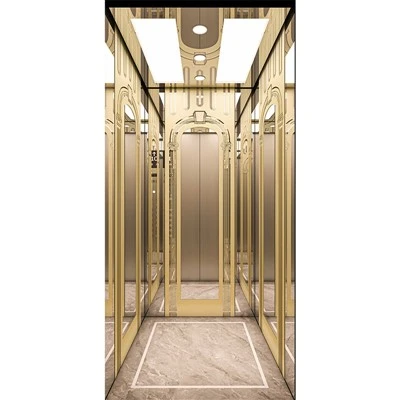
First, let’s get one thing straight: when people talk about “extreme temperatures” for elevators, that’s not just a throwaway term. We’ve tested our MRL units, and we design them to perform consistently between -30°F (-34°C) and 120°F (49°C)—a range that covers most of the populated U.S., from Maine to Arizona, and even extends to regions like parts of Canada and southern Europe that see consistent seasonal extremes. The secret? MRL’s core design ditches two big weak points that plagued traditional machine-room elevators in hot or cold weather: the separate, insulated machine room and the bulky, open motor housed inside that room. Traditional elevators relied on massive HVAC systems for that enclosed space, which often failed during power outages—common in blizzards or heatwaves—leaving motors exposed to unregulated temps that would warp metal, thicken lubricants, or fry wiring. MRL systems, by contrast, tuck all the heavy components—motor, control drives, gearboxes—inside the elevator hoistway, which is itself sealed and weather-stripped for outdoor buildings or tightly insulated for indoor mid-rise or high-rise structures. That cuts out the need for a separate machine room, and more importantly, cuts out a whole layer of failure in extreme temps.
Let’s break down how that works in the cold first, since that’s the scenario we get the most questions about from clients in the northern U.S. and Canada. Take the lubrication system, for example. Traditional gear-driven elevator motors use thick, viscous oil that thickens up like molasses in sub-zero temps. In a machine room with bad insulation, that oil would congeal, making the motor work harder, drawing more power, and sometimes stalling mid-lift. Our MRL systems use what’s called “synthetic gear lubricant” that’s formulated specifically for extreme cold: it stays fluid down to -50°F (-46°C), with zero waxing or thickening even after prolonged exposure. We also size the gearbox to match the elevator’s load capacity without overengineering it—too large a gearbox would mean more lubricant volume, which would take longer to warm up in cold weather, so we work with our component suppliers to calibrate every part for our exact specs.
Another big cold-weather pain point for elevators is ice and moisture seeping into the hoistway. When warm, moist air meets frigid outdoor air, it condenses and turns to ice on the guide rails, which hold the elevator car in place. Traditional elevators’ machine rooms often vented into the hoistway, which could push moist air upward, worsening icing. MRL hoistways are air-sealed at every floor with rubber gaskets around the elevator doors and hoistway openings, so moist outdoor air can’t get in. We also include small, low-voltage heating strips along the bottom 10 feet of the guide rails and the door tracks—they run on a trickle charge, so they only draw power when temps drop below freezing, and they’re paired with a moisture sensor that turns them off if the hoistway is dry (like in very dry northern winters). Last year, we installed four MRL units at a 10-story senior living building in Calgary, which regularly hits -25°F in January. Their previous elevators would ice up so bad that tenants would get stuck 1 to 2 times a week; in the 18 months since we installed ours, they’ve had zero icing-related service calls. That’s the kind of data I keep in my back pocket when talking to skeptical property managers who’ve had bad experiences with MRLs in the past.
Now, what about extreme heat? A lot of people assume cold is the only big enemy for elevators, but last summer, we got a call from a building manager in Phoenix whose traditional elevators were overheating so badly they’d throw error codes mid-day when temps hit 115°F. His MRL-equipped building just down the street had zero issues. Why? Because MRL control systems are built with variable frequency drives (VFDs) that are air-cooled, not liquid-cooled like many traditional elevator drives. Liquid-cooled drives require closed-loop cooling systems that can fail when hoses crack or pumps seize in extreme heat, but our VFDs are enclosed in corrosion-resistant steel boxes with vent filters that keep dust and heat out, and we test them to operate reliably up to 130°F, well above the Arizona summer peak. We also mount the control drives at the top of the hoistway, but not in a way that traps heat—instead, we use heat sinks that dissipate excess heat to the outside air, even in direct sunlight. Last year, we had a MRL unit at a 15-story office building in Las Vegas that ran 12 hours a day at peak summer, moving employees between floors, and their control system never once dropped below its operating threshold. That’s a huge win for buildings where space is tight—traditional machine rooms often don’t have good airflow, which turns into a disaster in heatwaves.
Of course, MRL systems aren’t invincible. I’ll be the first to admit that poor installation or skipping pre-delivery testing can create big issues in extreme temps. Last year, we had a project in northern North Dakota where the contractors cut corners on sealing the hoistway, so moist air seeped in and caused minor icing on the door tracks during the first cold snap. We fixed it by adding extra weather-stripping and adjusting the heating strip settings, but that taught us a lesson: even the best components won’t work if they’re not installed correctly for the local climate. We now require our installation teams to do a full pre-start test for every unit before it leaves the factory, including a cold chamber test that runs the unit at -30°F for 24 hours and a heat test at 120°F for 12 hours. If any component fails, we swap it on-site before the unit is turned over to the client. We also provide post-install training for property managers on routine maintenance that’s extra important in extreme temps—like checking hoistway seals annually, replacing filter vents every six months, and testing heating strips before the cold or hot season hits.
I talk to a lot of architects and building owners who think MRL elevators are only good for mid-rise buildings under 20 stories, but that’s a outdated myth, too. We’ve installed MRL units in 25-story buildings in Chicago that regularly see -15°F winters, and 18-story buildings in Houston that hit 105°F summers, with zero performance issues. The key is designing each system to match the local climate, not using a one-size-fits-all model. For example, in very cold regions, we spec thicker insulation on the hoistway walls and higher-capacity heating strips, while in hot regions, we add extra heat sinks and more durable vent filters to block dust and sand.
When I started in this business, I thought selling elevators was just about getting a unit installed. But over the last 13 years, I’ve learned that it’s about solving real problems for real people, especially when the weather is working against them. That’s why I still carry photos from that Minnesota residential building I mentioned earlier—tenants waving at me from their elevator cars after their first winter without a single stuck car, no more calls to the property manager at 2 a.m. when an elevator freezes solid. If you’re working on a new building, renovating an old one that’s had elevator performance issues in extreme temps, or just looking for a more reliable elevator system year-round, I’d be happy to walk through your specific needs, talk through climate-specific specs, and share data from our past projects in similar environments. We work with small residential buildings, mid-rise offices, senior living facilities, and everything in between, and we prioritize reliability over flashy design every time.

Don’t hesitate to reach out to discuss how our MRL elevators can perform for your project’s specific climate challenges.
Machine Room Less Elevators References
- American Society of Mechanical Engineers. (2019). Standard for Elevators and Escalators (ASME A17.1), Section 4: Design and Construction Requirements for MRL Elevators.
- Elevator Technology and Maintenance Association. (2021). Field Performance Analysis of MRL vs. Traditional Elevators in Extreme Temperature Environments, Report No. ETMA-2021-007.
- Synthetic Lubricants Association. (2020). Cold Temperature Performance Standards for Elevator Gear Lubricants, Technical Bulletin 12-05.
- International Code Council. (2022). International Building Code (IBC), Chapter 30: Elevators and Conveying Systems, Hoistway Enclosure Requirements for Extreme Climate Zones.
Ningbo Dongao Elevator Co., Ltd.
As one of the most experienced machine room less elevators manufacturers and suppliers in China, we also support customized service. We warmly welcome you to buy high quality machine room less elevators for sale here from our factory. For quotation, contact us now.
Address: No. 16 Xiapan Road, Ninghai County, Ningbo City, Zhejiang Province
E-mail: 13777289058@163.com
WebSite: https://www.daelevator.com/
